Excerpt from an Interview with Farid Kheradmand
... I tried to seek out masters and ask them for guidance, so I took the booklet I had prepared on these Dowrs (rhythmic cycles) and first went to see Mohammad reza Lotfi, who had come to Iran in 1994. The subject was very interesting to him, but he did not have specific information in this field to share with me, and in the end he suggested that I consult Madjid Kiani.
What exactly was this booklet?
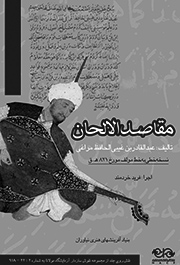
It was a conversion into modern notation of the īqāʿī cycles found in all the treatises available to me at the time, such as Sharḥ al-Adwār (a commentary on Ṣafī al-Dīn al-Urmawī’s thirteenth-century Kitāb al-Adwār), Banāʾī’s fifteenth-century Timurid treatise on music, and even Kanz al-Tuḥaf )a fourteenth-century Persian treatise on music, often attributed to Ḥasan Kāshānī(, whose rhythms and names differ from those of the other treatises. I had performed these rhythms with the technique I had at the time and recorded them on cassette tape. I had even composed on some of them, naturally on the shorter ones. I thought that what happens in the case of the atānīn could provide bases for chahārmezrāb, and so I composed several chahārmezrābs on them as well. Then I began comparing theories of īqāʿ in the old treatises and reached some interesting results. For example, I noticed that in Durrat al-Tāj (the music section of the Persian encyclopedic work by Quṭb al-Dīn al-Shīrāzī, 1236–1311, composed around the beginning of the fourteenth century) there is a table-like and highly complex algorithm concerning connected and separated īqāʿ, whereas in a book such as Jāmiʿ al-Alḥān (ʿAbd al-Qādir al-Marāghī’s early fifteenth-century Persian treatise on music) there is no more than one page of explanation on this subject, and even that is very vague. It seems that Marāghī (ʿAbd al-Qādir al-Marāghī, c. 1353–1435, the major Persian music theorist, composer, and performer of the late fourteenth and early fifteenth centuries) himself did not really understand this theory very well, and mentioned it only because he had heard it from the ancients, since immediately after this brief explanation he turns to the practical īqāʿī cycles and to “what is current.” In Maqāṣid al-Alḥān, which is Marāghī’s (ʿAbd al-Qādir al-Marāghī, c. 1353–1435, the major Persian music theorist, composer, and performer of the late fourteenth and early fifteenth centuries) summary of Jāmiʿ al-Alḥān, he no longer gives even this brief explanation, and in later treatises such as Banāʾī’s there is no trace of this algorithm at all.
I had reached the conclusion that if a book older than these were found, it would probably contain more information about this theory, and that is exactly what happened. When the first Persian translation of Kitāb al-Mūsīqā al-Kabīr was published, I observed that the basis of Fārābī’s (al-Fārābī, c. 870–950) theory of rhythm rests on precisely this algorithm. It is only by learning from him that one understands what Marāghī was trying to say. What is extraordinary in Fārābī is that he theorizes an algorithm according to which one can construct a new īqāʿ and, based on its method of construction, give it a systematic name, so that someone familiar with the theory can infer the content of this new rhythm upon hearing its name, without having heard it performed. In fact, the components of rhythmic construction, the various possible temporal intervals between the naqarāt (rhythmic strokes or pulses), and the speed of performance all have a specific and systematic terminology in Fārābī. For example, khafīf and thaqīl here are terms for fast and slow. Today this theory could be proposed again and developed further. Perhaps the necessity of doing so is not strongly felt because Western notation has become so common and habitual. But if one day a comprehensive theory of rhythm in Iranian music is to be formulated on the basis of its own nature and resources, one could certainly rely on Fārābī more than on anyone else.
In short, in Iran two decades ago no one could give me specific instruction in the field of īqāʿāt, and my research stopped at about that point. Today, however, with the publication of more articles and studies on the one hand, and with greater contact with neighboring cultures and the growing number of people active in this field on the other, many of my questions have been answered and many ambiguities have been clarified.
Let us return to the subject of the tasnif. So the rhythmic complexities you heard in old tasnifs led you to focus on this particular repertoire?
Exactly. I had realized that the matter of varied dukhūls (entry points in the rhythmic cycle) and the Dowr-like use of heavy beats is not much employed today, in direct contrast to what is very often heard on old recordings. In other words, my interest in Qajar tasnif was created essentially by the question of rhythm. I saw that after ten years of playing tombak, not only could I not properly accompany a tasnif such as “Ān ke halāk” or “Nabvad ze rokhat” on the tombak, not merely following the melody, but maintaining the Dowr from its correct point, but other instrumentalists of my own generation..., or students of other schools, also knew little about this issue, or did not find it important or attractive.
Is it not possible that, unconsciously, all good musicians keep the Dowr correctly by feeling and observe its dukhūls?
Not everyone does this correctly. Later, when the matter became much clearer to me, I understood that this is one of the current problems of many instrumentalists and, even more, many singers. It is true that we have grown up within the culture of this music, and its aesthetics have become embedded in our taste. Therefore, we see many self-taught and untrained people who observe “Dowr and dukhūl” intuitively and have an inner understanding of it. But we also have just as many professional and trained musicians whose work is flawed in this respect.
Only to point to one sign of these flaws, I refer you to performances and transcriptions of, for example, the Reng-e Farah in the mode of Homāyūn from the radif of Mirzā Abdollāh (Mirzā ʿAbdollāh Farāhānī, 1843–1918, a central master of the Qajar-period radif). With one or two exceptions, almost everyone who has approached this rhythmic piece has performed or transcribed its rhythmic dukhūls incorrectly. My point is that these details, indeed, not details, but principles of the art of keeping beat or of rhythmic understanding in music, which in the past were somehow transmitted through training and strongly observed, have now left the educational system and become matters of personal taste.
It was with this motivation that I went to Naser Farhangfar, because he was one of the few people who had still preserved the art of singing rhythmic pieces. But I soon realized that these concerns were not part of his system of teaching either, and that he too carried out these principles more by taste. I also spent a long time reconstructing old recordings with Madjid Kiani, but his guidance was not directed toward clarifying or resolving this weakness in the teaching of those principles. Ultimately, I came to the conclusion that the best source for this subject was the old records and performances themselves, and the good examples among them, from Hossein Tehrani himself to several other, sometimes anonymous, beat-keepers who had understood the aspect in question very well.
Look, there is a record by Mirzā Hossein-Qoli (Mirzā Hossein-Qoli Farāhānī, 1853–1916, a major Qajar-period master of the tār and the radif) and Seyyed Ahmad Khān (Seyyed Ahmad Khān Sāvehʾī, 1852–1931, a Qajar-period vocalist and one of the earliest recorded singers of Persian classical music) in Chahārgāh, in which the tasnif “Man az dast-e kamāndārān-e abrū” is performed in āvāz-e mokhālef. Seyyed Ahmad Khān begins many of the tasnif’s dukhūls incorrectly, but Āqā Hossein-Qoli, with awareness and skill, resolves this displacement in his instrumental responses and transfers the melody to its correct place in the Dowr. Another example is a record in āvāz-e Bayāt-e Esfahān by Parvāneh (the stage name of Batul Rezāʾī, 1910–1933, an early twentieth-century singer and instrumentalist in Persian classical music) and Habib Somāʿī, 1905–1946, an outstanding santur player and the son of Samāʿ Hozūr, the celebrated Qajar-period santur master), in which the tasnif “Āb-e ḥayāt” is performed. In this record, Parvāneh at times passes beyond the beat of dukhūl by lengthening the ornament at the end of the phrases. But Habib Somāʿī, when responding, subtracts from his instrumental answer the same amount of time by which the ornament had passed beyond the beat of dukhūl, so that the beginning of the next melody falls in the correct place of the Dowr. There are many such examples, all of which show that there was a system for rhythm and meter which the musician had learned and to which he remained committed.
Why do you think this problem exists more among singers, and that instrumentalists are the ones who have to correct and compensate for their mistakes?
This problem is not limited to singers; instrumentalists struggle with it as well. But quantitatively, you are right: these rhythmic errors, along with problems such as intonation, are more common among singers because they do not deal with them in such a tangible way. Look, when an instrumentalist wants to play a chahārmezrāb, he learns that this music has a base, and that this base is nothing other than a rhythm or Dowr that has become melodic. This calculation remains present throughout the entire piece. Singers, however, are not bound by this constraint to the same extent. Between one vocal phrase of a tasnif and the next, the singer does not sing a base with his throat; he merely remains silent. Naturally, then, he is less involved with, or aware of, this constraint. In my view this flaw arises only from a deficiency in training and has nothing to do with the person or his talent. I have tested this over fifteen years of teaching.
Is the concept or term dukhūl used in the old treatises?
Marāghī, in the fourth chapter of the eleventh section of Jāmiʿ al-Alḥān, speaks clearly of dukhūl and connects it with refined nature and an alert mind. Interestingly, in order to convey his meaning, he gives the example of verbal dukhūl, that is, the entrance of poetry into an īqāʿī cycle: for example, if the poem coincides with the first naqra, this entrance is called dukhūl maʿan, and so on to the end. Within this discussion, he also points to something strange. He says that a musician must be able to make a melody enter from “any naqra” in “any Dowr.”
This is, of course, possible to some extent in our music, in the sense that with a slight change in timing, one can bring the melody of a tasnif into an īqāʿī cycle from several different points. But this is by no means universally applicable. Gereyli can also be sung from the first beat in such a way that the listener does not feel that it has fallen out of beat. The tasnif “Gerye kon” by Āref can easily be started from two points in the Dowr: from the fifth beat, which is more pleasing, and also from the first beat, which also does not sound wrong. But this is not general. The hundred-percent possibility of what Marāghī says is, at least in today’s music and in our tasnifs, somewhat unlikely in practice. If we wanted to joke with him a little, we would have to say that Marāghī has a habit of saying that one can perform every kind of technique in every possible situation, and that “I have done it, and no one else could.” But in any case, the concept of dukhūl in the sense we mean certainly existed in the past as well.
This same Marāghī, when explaining the various forms of the nawbat-e morattab, such as qawl, ghazal, tarāneh, forūdāsht, and so on, refers to the correct point of rhythmic dukhūl in the tarāneh in this way: for example, if the Dowr has sixteen naqarāt, one should enter from the seventh naqra, or if the Dowr has twenty-four naqarāt, from the ninth. Banāʾī too, in his treatise, when he records a piece in the abjad system, notes that it should begin from such-and-such a naqra of the Dowr. Thus the dukhūls were systematic and could differ from piece to piece.
You said that the repertoire, and naturally the performance, of slow rhythms and multiple dukhūls in Qajar music was more complex than in the contemporary period. Do you think this was due to some form of instruction in these principles in the past, or did they too act more by taste?
In my view, these principles were absolutely taught. My reason is that the first stage in learning music for musicians of that period was learning the tombak, accompanying more senior musicians, and in many cases singing tasnifs. Habib, for example, was initially obliged to accompany his father’s santur on the tombak.
The example of Habib has become rather clichéd. Were there other well-known musicians who began their work with rhythm?
Samāʿ Hozūr (a Qajar-period santur and tombak player and the father, probably non-biological, of Habib Somāʿī) himself was a tombak player, as is shown in Kamāl al-Molk’s famous painting (Kamāl al-Molk, the title of Mohammad Ghaffārī, 1848–1940, Iran’s most celebrated modern academic painter), where he accompanies the santur of Mohammad Sādeq Khān (Mohammad Sādeq Khān Sorūr al-Molk, also known as Santur Khān, a prominent Qajar-period santur and kamancheh player and head of the court musicians under Nāṣer al-Dīn Shāh.) and the other instruments. Or, for example, Abolhasan Saba (1902–1957), Yusef Forutan (1891–1979), and Nur-Ali Borumand (1905–1977) all played rhythm. This variety, knowledge, and rhythmic understanding in Forutan’s pieces and performances, which were usually recorded without tombak accompaniment, always astonished me. I thought it would be impossible for someone not to know how to play the tombak and yet possess such abilities in this field. Later, Dariyush Pirniyākān, in an interview I had with him, said that Yusef Forutan also played tombak. Saʿid Nafisi gives an even more interesting example. He says that one day Āref Qazvini (1882–1934, the celebrated Iranian poet, lyricist, and musician associated with the Constitutional Revolution) was at our home, busy composing a tasnif, and the tool he used for this work was an cigarette case, on which he constantly tapped the rhythm, wrote, tapped again, and corrected his work. It is very natural that an artist such as Āref, with all the rhythmic complexities in his compositions, would have been familiar with tombak playing ...
.................................
... For example, the dukhūl of the first phrase of “Raftam dar-e meykhāneh” is on the first beat, and its ending falls on the fifth beat of the next Dowr, which can also be extended to the sixth, so there is enough time to prepare the dukhūl of the next phrase on the first beat. The weakest and most amateurish possible situation is that the dukhūl and ending of your first phrase in a six-beat Dowr should fall, for example, on beat one, and that the dukhūl of the next phrase should also need to begin from one. In this case, the performer must wait five beats until a complete Dowr has passed, and then sing the next phrase from the first beat of the following Dowr. If the distance between the ending and the next dukhūl is four beats, the construction is also weak. A three-beat distance is good; a two-beat distance is excellent; a one-beat distance is again good; and no distance is bad. I extracted these aesthetic rules through the analysis of a large part of the old tasnif repertoire. Statistically, too, the two-beat distance, which is excellent, has been used more often than the other cases.
It is also possible for the melody to end on upper beats. Now let us suppose that the composer has arranged this time interval, say two beats, for several consecutive phrases with similar dukhūls. But, as I said, in good tasnifs the dukhūls must certainly be displaced. In this case, different techniques are available: if the new dukhūl moves one beat forward, the distance becomes three beats, which is good; and if it moves one beat backward, the distance becomes one beat, which is also good. Between these two, moving one beat forward is usually chosen. If the new dukhūl is more than one beat away from the previous dukhūl, other techniques are required. One must either add something to the final phrase or subtract something from it in order to provide the necessary distance for the next dukhūl. An example is the addition of “jānam jānam” to the end of the first phrases of the tasnif “Āb-e ḥayāt.”
In this connection there is a tasnif whose existing flaw clearly shows that, contrary to what many believe, the piece was not composed by Āref, because mistakes of this kind do not occur in his work. The first phrase of “Bahār-e delkash” begins on beat two and a half, between the second and third beats, or on the off-beat of the second beat, and after several cycles ends on beat two, leaving only half a beat before the next dukhūl. Most singers, when faced with this part of the tasnif, add a lengthening to the final syllable in order to create a full measure of distance. Sheydā’s tasnif “Alā sāqiyā” has a similar problem: the end of the phrases has no distance from the next dukhūl. Two old performances of it employ two different solutions to this problem. One chooses a complete one-measure stop and fills it with an instrumental response; the other sings all these phrases continuously without silence. Neither of these two solutions is able to remove a flaw that the composer himself should have considered.
If both tasnifs attributed to Akram al-Dowleh, “Nabvad ze rokhat” in Navā and “Āb-e ḥayāt” in Esfahān, really are by her, then she too must be counted among the greatest tasnif composers of Iran (Akram al-Dowleh Shirāzī, a little-documented female composer associated with the Qajar-period tasnif repertoire). For in both of these tasnifs, the techniques mentioned above are used in the best possible way. In the tasnif “Nabvad,” the intervals between the endings and the melodic dukhūls are arranged very beautifully by stretching the final syllable of various phrases in a manner resembling vocal ornamentation.
In speaking, you sometimes use the word Dowr and sometimes the word rhythm. Is this choice deliberate? In your view, is there a difference between the two?
Look, one of the problems in Iranian music, including in the field of meter, is that multiple, inconsistent technical terms are used for practical concepts that are identical and shared; sometimes there is no clear term for them at all. For this reason, in theoretical discussions it is difficult to arrive at a shared discourse, even though in practice there may be a great deal of agreement on the subject. One example is precisely the matter of rhythm in its general sense, for which various terms such as Dowr, meter, weight, and so on are used. Another example is the naming of rhythms.
It is very surprising that in the very same period in which the names of the dastgāhs and gūshehs were systematized with such care, no similar effort was made to name and classify rhythms. Why is it that even today we do not allow the name of the dastgāh of Shur, or its gūshehs, to be changed in the slightest, but we are prepared to accept a term such as 2/4 as the name of one of our rhythmic types? Of course, I have no prejudice about whether a name is Western or Eastern. But it is interesting to me that a culture should have names and classifications even for its smallest melodies, but not for its rhythms.
Nevertheless, if we search, we see that, a little earlier, this record was not entirely empty in this respect. For example, Hasan Mashhun, in his book, uses good names for different rhythms: for instance, “zarbi-ye tond” (fast six-beat) for the 6/16 pieces, or the very interesting term “dozarbi-ye lang" (lame two-beat) for the same rhythm that today we transcribe as 2/4 but perform in practice as a seven-beat rhythm; and it seems that this term is quite old. Simple terms such as four-beat and six-beat certainly existed as well. In the old treatises, there are also names such as ramal and mokhammas, and sometimes Iranian names such as shādiyāneh, barafshān, doyek, and others of this kind. Perhaps if one day a consensus emerges regarding the theory of contemporary Iranian music, it would not be a bad idea to use these names, regardless of whether the structure of a given rhythm necessarily resembles the old type that bore the same name.
This manner of naming is completely accepted in our musical culture. Who can claim, for example, that the gūsheh of Takht-e Tāqdis is the same melody that Bārbad (the legendary Persian musician, poet and composer of the Sasanian court under Khosrow II [r. 590–628]) composed? Yet this name has been used for naming a gūsheh in today’s music. In the same way, one can choose an ancient name for a contemporary rhythm.
One very noteworthy point in this same field is the choice of the three time signatures 6/4, 6/8, and 6/16 to indicate speed in six-beat rhythms, which has been accepted almost as an unspoken principle among all musicians. You know that it is a mistaken assumption to think that 6/4 is inherently slower than 6/16. But this choice has an interesting connection with a kind of old way of thinking. Within this presupposition lies the fact that, in our music, speed is a factor in creating a different rhythm, and this returns to the same idea of rhythmic space. In truth, the rhythmic space of a slow six-beat rhythm is completely different from that of a fast six-beat rhythm. These are all unnamed presuppositions in the field of meter in Iranian music.
Now look at Marāghī’s books. He says that among the Arabs there are six common Dowrs. But when he names them, you realize that they are in fact only two rhythms: khafīf-e thaqīl, thaqīl-e avval, and thaqīl-e thānī are, in terms of number of beats, one and the same rhythm. Ramal, khafīf-e ramal, and thaqīl-e ramal have exactly the same relationship to one another. The two words khafīf and thaqīl are musical terms meaning fast and heavy, and in a sense they indicate tempo. In this situation, fast ramal is one separate Dowr, and slow ramal is another. In my view, the first people who decided to notate Iranian music in staff notation chose three different time signatures for six-beat rhythms precisely because of this mentality.
So, in your view, for Marāghī, tempo changed the character of a rhythmic pattern with a fixed number of beats to such an extent that he classified it independently?
Yes, and I want to say that in practice this is still the case. The choice of 6/4, 6/8, and 6/16 is in fact a choice for different rhythms, because the character and manner of performance of what we call 6/8 are no longer the same as those of 6/4 and 6/16. This view resembles the old view; otherwise, we could have chosen only one of these time signatures and simply specified different speeds for each piece by changing the tempo number.
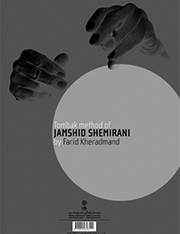
Another sign of this is that these conventional time signatures also bring to the mind of the Iranian tombak player the principal base of the Dowr in question. For example, when 6/4 is written, the quality of the beginning of the Dowr, the first two quarter notes, is, in most cases, played on the tombak with one tom and one riz (a tremolo-like roll) . But when the Dowr is 6/8, there will usually no longer be a riz on the second beat. To prove this, it is enough to look at the 6/4 and 6/8 measures in Tehrani’s tombak method, as well as in other instructional books. Thus, for the Iranian tombak player, the time signature contains many more concepts and instructions than merely informing him of the number of eighth notes, quarter notes, and so on in each measure.
In Marāghī, do the atānīn and their qualities also change in these “rhythms that are practically equal in number of beats”?
The atānīn are doubled and halved, and their quality changes as well. The same is true today: the number and quality of the performed naqarāt in a slow six-beat rhythm differ from those in a fast six-beat rhythm.
......
“Rhythmic space” is a term you use often. What exactly do you mean by it?
I use it for a concept that, before this, either had no name or whose name I had not found. Look, when you play a specific rhythm with a specific combination of a particular kind of naqarāt, something happens beyond the matter of timing, and I call that its rhythmic space. The rhythmic space of a specific rhythm takes shape within a people and a history. All the demands that the ear of a people accepts, as well as all the habits, details, and aesthetic relations of that people, play a role in its existence. Therefore, this space creates specific requirements for the performer. One of them, as I said, is that, for example, this beat or that beat in a given rhythm can accept a short syllable, or that only its second and sixth beats can carry long syllables of the text. Rhythmic space shows you which points of the Dowr possess which possibilities and capacities, for example, where in it the use of an upbeat is pleasing, or conversely where this technique does not work well.
In this space, rhythm is not merely counting; it is a set of factors that affects all other aspects of musical construction. Therefore, if you have understood the rhythmic space of a Dowr, you will not start counting while hearing it. To clarify this, one can point to the, in my view, sad story of five-beat and seven-beat rhythms. The asymmetrical five-beat or seven-beat rhythms that have become common in Iranian music over the past few decades have still not managed to find their own multidimensional space, and generally remain in the counting pattern of “one two / one two three” for five-beat rhythms, and similar patterns. This can be clearly observed in the many compositions written on these rhythms: because of this absence, the melodies usually remain entirely bound to this counting, and the fixed rhythmic pattern imposes itself continuously on the melody to a very great extent.
Rhythmic space, however, goes beyond the initial matter of the number of beats and accents in a rhythm. When we perform “Raftam dar-e meykhāneh,” we never hear the counting of the beats in it, because the melody has been deeply dissolved into this framework, or, to put it another way, it glides over the columns of rhythm with complete fluidity. But these characteristics have not yet been achieved for the new rhythms.
It is because of the existence of this rhythmic space that I believe working on rhythmic pieces with foot-tapping or with a metronome is not a suitable method, or at least not a complete one, for someone who wants to deal with the aesthetics of rhythm, because it controls nothing other than counting and speeding up or slowing down. One must hear the rhythm with its complete space, and this is necessary for musics such as the music of contemporary Iran. This is what Indians have done: they have created a device that plays rhythms for performers with the sound of the tabla and its performance characteristics. This method would be very useful in the teaching of Iranian music. In other words, if a student wants to practice chahārmezrāb, he must certainly do so with its rhythmic space; in that case, the rhythmic space itself will automatically place all the correct states and accents in his ear.
With what metronome can you practice dozarbi-ye lang (lame two-beat)? Rhythmic space in Iranian music must be learned from the sound of the tombak and from the characteristics of its principal bases for different rhythms. My suggestion is that CDs should be produced and released in which Iranian rhythms, with all their performance characteristics and at different tempi, are played precisely on solo tombak for long durations, so that students can easily practice rhythmic forms on their own with the correct rhythmic space. With a simple piece of software, such a possibility could be made available to students.
In my view, what composers today do with poetry, that is, taking it as the model and framework for musical construction, is in fact what should be done with rhythm and its various spaces. Today, in composing, they look at poetry and enter the rhythmic space of poetry, becoming so bound by it that a large part of rhythmic possibilities remains essentially untouched.
How do you transmit this whole aesthetic system to your students?
From experience I have seen that ...
Excerpts from the interview with Farid Kheradmand, published in Mahoor Music Quarterly, Spring and Summer 2011.